Model guide
Fiat Grande Punto: the big small car
Fiat's 2005 Punto grew beyond four metres, gained the stance of a larger car and carried a heavy commercial burden. Its clean Giugiaro shape made that growth look natural.
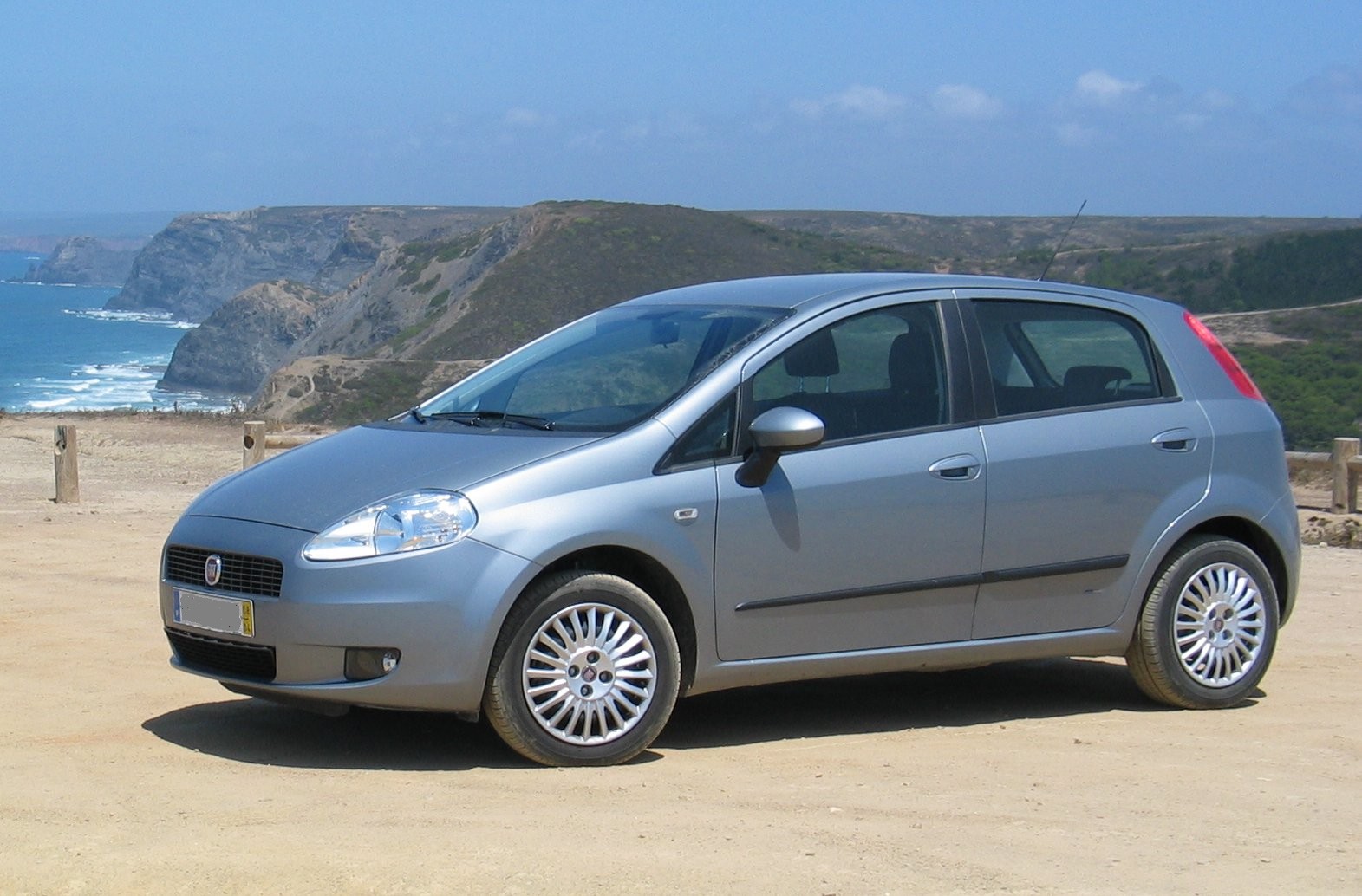

Fiat introduced the Grande Punto in Turin in September 2005. The adjective was literal: at 4.03 metres long, the third modern Punto generation moved to the upper edge of the European supermini class. More room and a more substantial road presence were central to its pitch.
The car arrived at a consequential moment for Fiat. The Punto name had already been commercially important for two generations; the new model had to provide volume, improve perceived quality and make Fiat look confident again. It was a mainstream product carrying the expectations of a corporate turning point.
Giugiaro's disciplined shape
Italdesign Giugiaro developed the exterior with Fiat's style organisation. The long headlamps, low grille and tapering nose prompted frequent comparisons with contemporary Maseratis. The more durable achievement is not resemblance to a more expensive car, but proportion: short overhangs, a rising waist and a planted stance disguised the height and packaging required of a practical hatchback.
Three- and five-door bodies shared the basic design. The three-door emphasised the sweep of the side glass; the five-door made the rear access explicit without disturbing the principal lines. The cabin was less theatrical, arranged around straightforward controls and useful space.
Platform and safety structure
The Grande Punto used the Small Common Components and Systems architecture developed through Fiat's cooperation with General Motors and also related to the period Opel/Vauxhall Corsa. That shared foundation does not make the cars interchangeable: engines, chassis calibration, body, interior and market specification remained distinct.
Fiat's launch material emphasised a body engineered for contemporary crash requirements and the availability of multiple airbags and electronic stability control. Exact equipment varied materially by trim and market, so a modern buyer should inspect the car rather than infer its safety equipment from the model year.
Petrol and Multijet engines
The initial European range combined FIRE petrol engines with 1.3- and 1.9-litre Multijet diesels in several outputs. Fiat later broadened the petrol side with turbocharged T‑Jet versions and evolved the diesel range. The same badge can therefore cover cars with very different performance, tax and maintenance profiles.
| Launch | September 2005, Turin |
|---|---|
| Length | 4.03 m (factory launch figure) |
| Bodies | Three- and five-door hatchback |
| Core petrol families | FIRE; later T‑Jet variants |
| Core diesel families | 1.3 and 1.9 Multijet; market availability varied |
| Drive | Front-engine, front-wheel drive |
Grande Punto, Punto Evo and Punto
The naming needs care. The heavily revised Punto Evo arrived in 2009 with new front and rear styling, an extensively changed dashboard and updated engines. Fiat later simplified the name back to Punto and softened some of the Evo's visual changes. These are related phases of the same basic generation, not three unrelated cars.
That continuity creates parts and listing confusion. Registration year alone does not establish which front structure, interior electronics or engine calibration a car uses. Identify the exact version before ordering parts or relying on a repair guide.
The Abarth branch
The revived Abarth marque used the Grande Punto as one of its first modern products. Turbocharged power, revised suspension, brakes and body details made the Grande Punto Abarth a coherent performance derivative. “Essesse” kits then increased the specification further, echoing Abarth's historical practice of staged upgrades.
Documentation matters. A factory Abarth, an authorised kit installed to the correct specification and a later collection of aftermarket parts are not the same proposition. Buyers should verify identity and installation records rather than treating badges or wheels as proof.
What to inspect
Age now dominates the purchase decision. Check the operation of electric power steering, climate and body electronics; inspect suspension wear, brakes and corrosion underneath; and confirm timing-drive requirements for the exact engine. On diesels, usage pattern matters because short journeys can be hard on later emissions equipment. Turbo petrol cars require evidence of correct oil and cooling-system care.
The Grande Punto sold in large numbers, so patience is rational. A modest version with consistent service records is usually a better starting point than a rare trim whose history is incomplete.
Why it matters
The Grande Punto did not reinvent the small car as radically as the 1957 500 or the original 1980 Panda. Its achievement was to make greater size and maturity desirable without abandoning clarity or affordability. The design gave Fiat a modern public face, while the platform and engine range allowed the car to compete across a much wider slice of the market than “small Fiat” once implied.
Sources and further reading
- Fiat, preview and launch context for Grande Punto.
- Fiat, Grande Punto technical and range material.
- Fiat UK, Grande Punto market introduction.
- Italdesign, Grande Punto project record.
Sources accessed 14 August 2026. Market-specific equipment and engine availability must be checked against the individual car.