Buyer’s guide
Classic Fiat 124 Sport Spider buyer’s guide: 1966–1985
This page is exclusively about the classic Fiat 124 Sport Spider built from 1966 to 1985, including the later Fiat Spider 2000 and Pininfarina-era cars. It does not cover the modern 124 Spider launched for the 2016 model year.
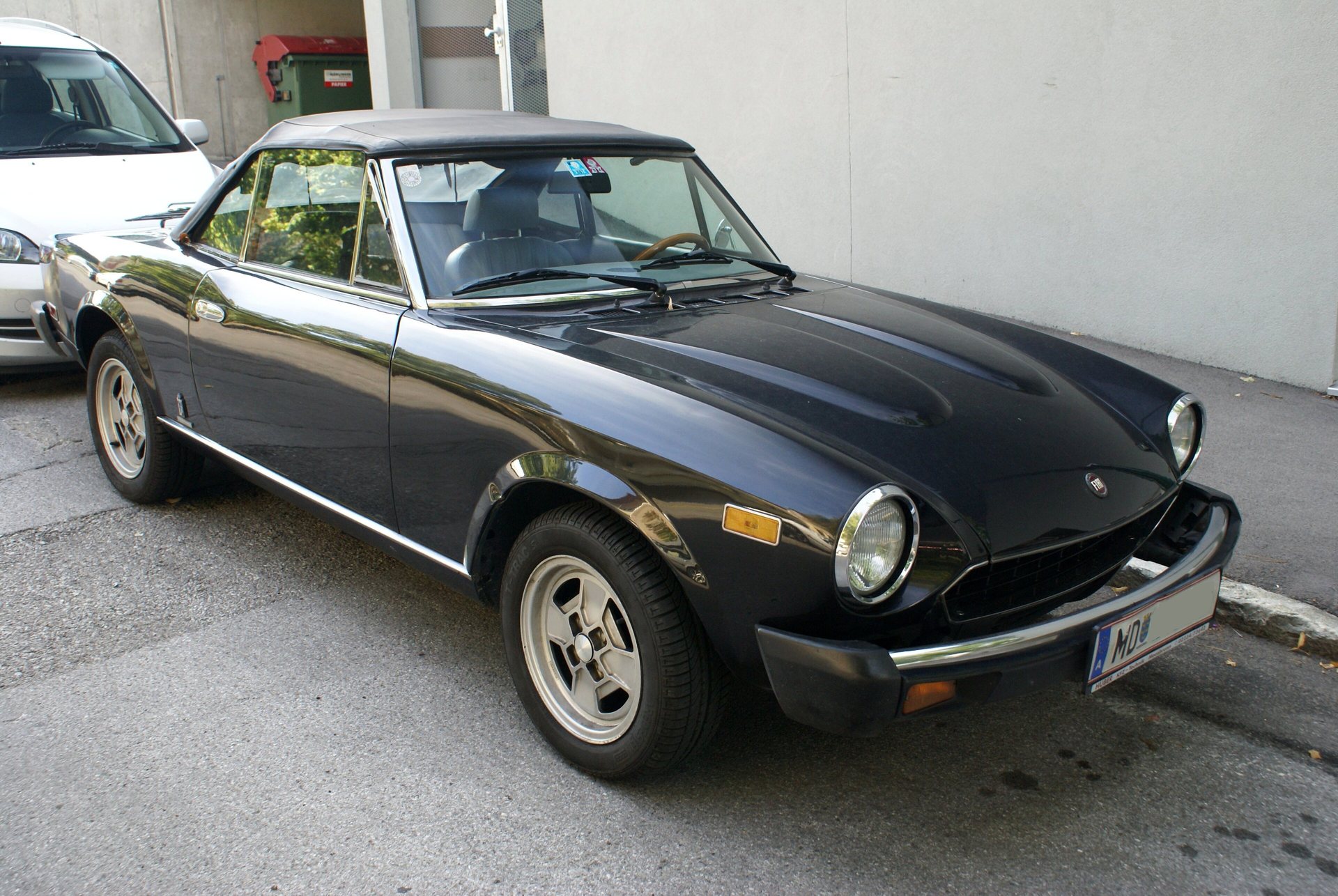

Fiat unveiled the 124 Sport Spider at the Turin Motor Show on 3 November 1966. Pininfarina gave the two-seat roadster restrained proportions, while Fiat supplied a rear-wheel-drive platform, a twin-cam four-cylinder engine, a five-speed gearbox and four-wheel disc brakes. The result remained recognisable through nearly two decades of engine, bumper, trim and market changes.
That long life makes the name deceptively broad. A small-bumper European 1.4, an emissions-controlled American Spider 2000 and a late Pininfarina Spider Europa may share the same underlying shape but not the same engine output, equipment or identity. The first buying task is therefore to establish year, original sales market and actual specification before deciding which version suits you.
Engine and model evolution
| Period | Engine | Factory context |
|---|---|---|
| 1966–1969 | 1,438 cc twin-cam, 90 HP | Original 124 Sport Spider; five-speed manual and four disc brakes |
| Late 1969 onward | 1,608 cc twin-cam, 110 HP | Second-series option with twin carburettors and bonnet bulges |
| 1972 onward | 1,592 cc / 1,756 cc | European figures quoted at 108 HP and 118 HP respectively |
| Late 1970s | 1,995 cc | Two-litre cars; output and fuel system depend strongly on market and year |
| Spider Europa era | 1,995 cc, 105 HP | Pininfarina-developed European return shown in 1981 |
| Volumex | 1,995 cc supercharged, 136 HP | Final low-volume development introduced in 1983 |
Do not use the table to infer a particular car’s output. United States emissions rules brought different carburettor, injection and power specifications, plus energy-absorbing bumpers and changes in ride height. An automatic transmission was also offered in that market. Later cars may carry Fiat, Spider 2000, Pininfarina or Spider Europa identification according to year and destination.
The 124 Abarth Rally is a distinct homologation derivative with major mechanical and body changes. Any claimed example needs marque-specialist authentication rather than a checklist comparison with an ordinary Spider. The same caution applies to turbo conversions, engine swaps and right-hand-drive conversions.
Body condition is the decisive check
Rust can make an attractive 124 Spider uneconomic or unsafe to restore. Inspect the wheelarches, wing edges, inner wings, sills, floors, chassis legs, boot area and the front suspension crossmember. The examination should include the underside and concealed structural areas, not just paint and visible outer panels. A car imported from a dry climate may still have old repairs, sun-damaged trim or corrosion caused before export.
Study the door gaps with the car on level ground and observe whether they change as the doors open. Gaps that close toward the top can indicate a weakened shell, but only a body specialist can establish the cause and repair quality. Look for swelling seams, fresh coating over uneven metal, poorly aligned panels and evidence that suspension loads are being carried by repaired or corroded structure.
Ask for photographs and invoices from any restoration. They should show how corrosion was exposed and repaired, which panels were replaced and how alignment was checked. A recent repaint without that record tells you little about the metal underneath.
Engine and cooling checks
Arrange a true cold start. The twin-cam should be assessed for abnormal noise, smoke, stable oil pressure and serious leakage, then run long enough for the cooling system to reach normal operating temperature. A light trace of old-car seepage is different from active loss, damage to the low-mounted sump or contamination. Hoses, radiator, fan operation and signs of earlier overheating all deserve professional examination.
Timing-belt history is important, but there is no responsible single interval for every engine, belt type and usage pattern covered by this page. Match the engine identity to an invoice showing date, mileage and the work completed, then use current specialist guidance for that exact version. If the history is ambiguous, treat it as unresolved until a Fiat twin-cam specialist advises.
Carburetted and injected cars require different expertise. Cold and warm starting, idle, throttle response and emissions equipment should agree with the claimed specification. On an imported car, check that any removed or altered emissions hardware remains lawful where it is now registered. Non-standard carburettors, camshafts or ignition systems should come with invoices and a clear calibration history.
Gearbox, axle, steering and brakes
Most cars use a five-speed manual. On a careful road test, use every ratio and check for jumping out of gear, obstructive selection, rumbling and vibration on acceleration and overrun. Inspect the differential and driveline for noise and leakage. Early driveline details differ from later cars, so identify what is actually fitted rather than assuming interchangeability.
Steering play, tired dampers, worn joints and old tyres can erase the light response for which the Spider is valued. The four-wheel disc-brake arrangement was a notable original feature; today the inspection should confirm hydraulic condition, even operation and the provenance of replacement parts. Any pull, vibration or fluid loss needs diagnosis before purchase, not a promise of a quick adjustment.
Roof, cabin and electrics
Raise and lower the hood and inspect the fabric or vinyl, frame, catches, rear window, seals and drains. Check the floors and behind the seats for dampness. Water ingress can damage trim and electrical connections while also pointing to corrosion outside the visible cabin.
Operate all lights, instruments, wipers, heater controls, horn, windows and fitted accessories. Earthing faults and aged components can produce intermittent symptoms, but changes should not be made before the wiring and charging system are assessed. Confirm that switches, lamps, badges and upholstery are appropriate to the year because seemingly minor early pieces can be difficult to replace accurately.
Left-hand drive, conversions and provenance
The model was factory-built in left-hand drive. Right-hand-drive examples were converted, often using related Fiat parts, and should be evaluated as individual engineering work. Identify who performed the conversion, inspect steering, pedals, bulkhead, wiring and wiper arrangements, and confirm registration and insurance acceptance. A conversion is not automatically poor, but it is not factory originality.
Compare chassis, engine and registration identifiers with invoices and import documents. Mileage alone is rarely conclusive after several decades; a continuous trail of inspections, servicing and ownership is more useful. Stellantis Heritage offers a Fiat Certificate of Origin service that can provide production-record information for eligible cars. Use independent history, theft and title checks appropriate to every country in the car’s past.
Which classic 124 Spider?
Early 1.4 and 1.6 cars preserve the original small-bumper character. The 1.6 and 1.8 add power while retaining a period European appearance. Later two-litre cars are more numerous in North American form, but their bumpers, emissions equipment and output vary. Spider Europa and Volumex cars occupy a distinctive late chapter and demand accurate identification.
Choose the era you genuinely want, then prioritise structure, provenance and completeness over a preferred engine badge. Begin with our classic Italian car inspection checklist and commission an independent specialist inspection before committing. This guide does not authenticate, value or certify a vehicle.
Sources and further reading
- Fiat, “124 Spider celebrates its 50th anniversary” — launch, design and engine chronology.
- Hagerty UK, Fiat 124 Spider (1966–85) buying guide — independent model and inspection context.
- Stellantis Heritage, Fiat Certificate of Origin.
Sources accessed 19 August 2026. Engine output, equipment and legal requirements differ by year and country; verify the individual car’s original market.