Abarth 850 GT: the respectable end of the scorpion
The 850 class produced Abarth's most famous racing saloon and, alongside it, a series of coachbuilt coupés aimed at buyers who wanted the engineering without the stripped-out competition car. The two are frequently confused.
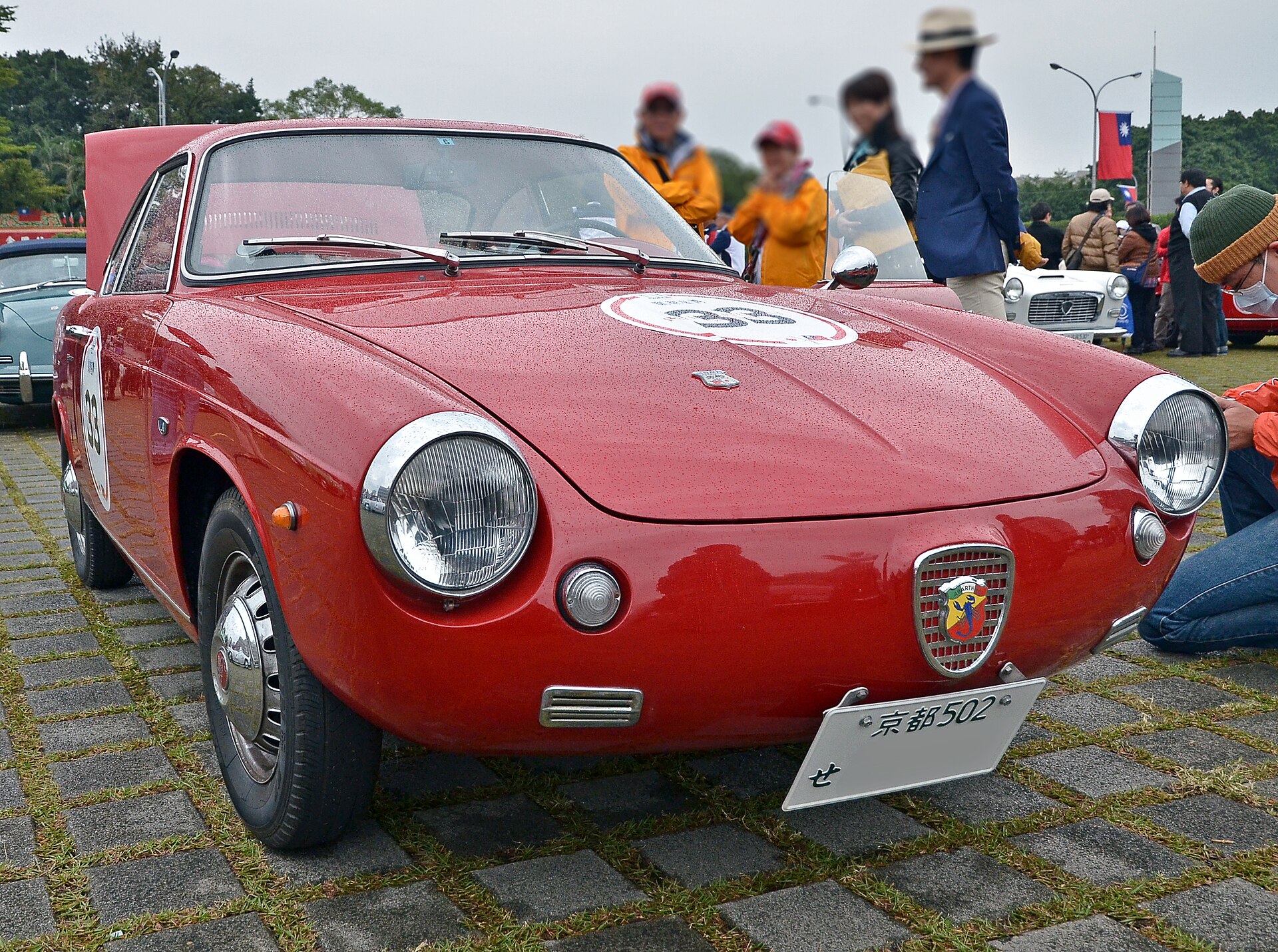

By the early 1960s Abarth had thoroughly established what it could extract from Fiat's rear-engined architecture. The 850 designation marks roughly where that development arrived: a nominal 850cc drawn from an engine that started life considerably smaller.
What Abarth then did with that engine split in two directions, and understanding the split is the key to this part of the range.
TC versus GT
The 850 TC — Turismo Competizione — is the racing saloon. It retains the Fiat 600's body shell and became one of the definitive touring-car racers of its era, recognisable by its front-mounted radiator and the propped-open engine lid at the back. It was built to win races in the small-saloon classes, and it did so relentlessly.
The 850 GT cars took the same mechanical thinking in the opposite direction: coachbuilt closed bodies, more comfort, more visual drama, and a proposition aimed at road buyers rather than club racers. Various carrozzerie were involved across the 850-class coupés, and the results differ considerably in style and in how many were made.
Same engineering, opposite intent. The TC was built to embarrass more expensive saloons on Sunday. The GT was built for someone who wanted the Abarth badge without the noise, heat and compromise.
What you actually get
The mechanical package is familiar: rear-mounted four-cylinder, Abarth-developed breathing and cam work, uprated brakes and revised suspension. In a coupé body the character shifts — slightly more weight, considerably more refinement, and a car you could plausibly use over distance.
That last point is worth dwelling on for anyone considering ownership now. The competition-specification Abarths are thrilling and largely intolerable beyond an hour. The GT cars were designed around the possibility that someone might want to arrive somewhere without hearing loss.
| Base | Fiat 600-derived rear-engined platform |
|---|---|
| Engine | Water-cooled four-cylinder, Abarth-developed, nominal 850cc class |
| Body | Coachbuilt closed coupé; builder varies by model |
| Contrast with | 850 TC — Fiat 600 saloon shell, competition specification |
| Era | Early to mid 1960s |
Buying notes
Establish which car it actually is
Given the naming confusion above, the first job is identification, not valuation. Chassis records tell you what you are looking at; the seller's description tells you what they would like you to think.
Bodywork and the coachbuilder
Coachbuilt bodies mean specialist repair, limited panel availability and — where alloy is involved — the fatigue and electrolytic corrosion issues that affect all such cars. Structural repair sections are not sitting on a shelf anywhere.
Mechanical parts supply
Base Fiat components remain findable. Genuine Abarth-specific parts — carburation, exhaust, internal engine components, instruments — are the expensive scarcity, and their absence or substitution should be reflected in the price.
Rust in the platform
Whatever sits on top, the underlying Fiat structure rusts in the familiar places: floors, sills, suspension mounts, front compartment. A beautiful body over a corroded platform is the most expensive kind of bargain.
Where it sits today
The 850 TC carries the competition history and the iconography, and the market prices it accordingly. The GT coupés are quieter propositions — often rarer in absolute numbers, usually less expensive, and considerably more usable.
For anyone who wants to actually drive an Abarth rather than display one, that trade is worth examining closely.