Abarth Spyders: the marque's least tidy chapter
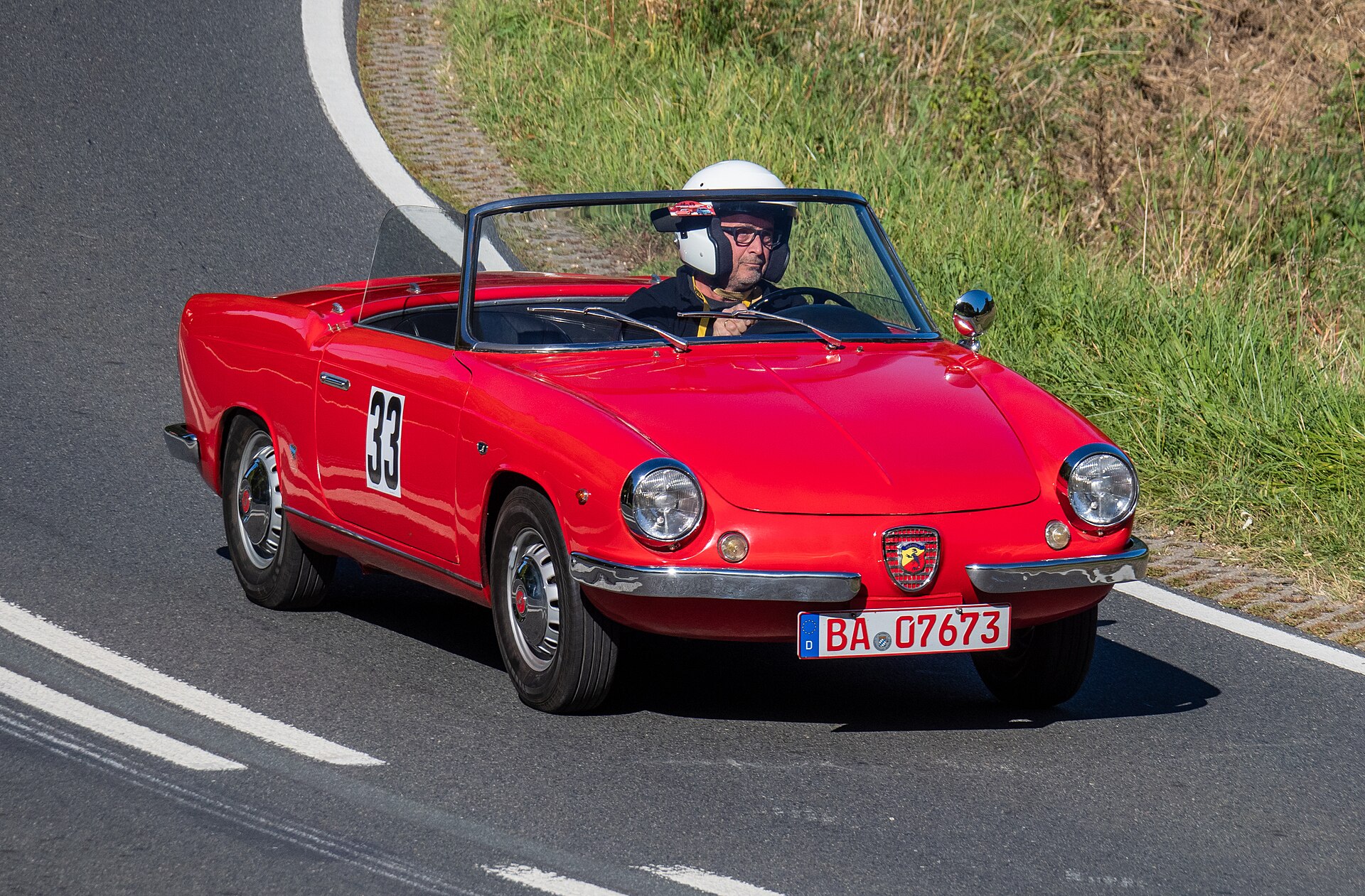
If the coupés are difficult to categorise, the open cars are worse. Small numbers, several coachbuilders, overlapping names and patchy records make this the part of Abarth history where confident claims should be treated with the most suspicion.

Abarth's core commercial logic favoured closed cars. Coupés were more aerodynamically efficient, which mattered for the record runs and class racing that drove the marketing, and a fixed roof contributed structural stiffness that a small, light chassis badly needed.
Open cars therefore sat slightly outside the main thrust of the business — built in smaller numbers, often for specific customers, competition categories or show purposes. That is precisely why they are now both desirable and difficult.
Why the records are thin
Three things compound here.
Low volumes. Where a model was built in tens rather than hundreds, a single lost ledger removes a meaningful share of the total documentary record.
Multiple coachbuilders. Abarth worked with several carrozzerie across its history. An open car might be bodied by one house on a chassis prepared by Abarth, sold through a third party, and described differently by each.
Inconsistent period naming. Abarth's designations tracked engine capacity, and capacities changed as development continued. The same basic car might appear under different numbers across its life, and period press was not rigorous about it.
The result: for many individual open cars, the most reliable identification is the chassis number and whatever registry has done the work of tracing it — not the model name on the windscreen banner.
The broad categories
Competition-derived open cars
Sports-racing machinery built for categories where an open body was permitted or advantageous. These are the cars with genuine competition histories, and where documented that history is the dominant component of value.
Coachbuilt road spyders
Open bodies on Abarth-prepared running gear, built for road use and often for display. Design quality varies enormously — some are exceptional, some are of their moment in ways that have not aged as kindly.
Later Fiat-era cars
After the 1971 Fiat acquisition, the Abarth name was applied to Fiat products in ways that differ fundamentally from the independent era. A post-1971 Abarth-badged open car is a different kind of object from a 1950s coachbuilt spyder, and should be researched and valued as such.
Researching a specific car
If you are looking at an actual car rather than reading for pleasure, the sequence that matters is:
1. Chassis number first. Before the photographs, before the story, before the price. Everything else follows from establishing what the car physically is.
2. Registry and marque specialists. Abarth has active enthusiast organisations with access to records no general price guide holds. Their assessment is the closest thing to authoritative available.
3. Period documentation. Original invoices, competition entries, contemporary photographs. For low-volume cars this is often the only evidence linking a physical object to a claimed identity.
4. Physical inspection by someone who knows these cars. Alloy bodies, competition modification, decades of repair and the possibility of reconstruction around a surviving component all demand a specific expertise.
What we are still working on
This page is deliberately cautious. Rather than publish a confident model-by-model list drawn from secondary sources that frequently contradict one another, we would rather set out the categories, explain why the record is thin, and expand into individual models as we can properly verify them.
If you own one of these cars, or hold documentation that would help, we would genuinely like to hear from you. That is how this part of the archive gets built properly.