Buyer’s guide
Lancia Delta Integrale buyer’s guide: 1987–1994
This guide covers the 1987–1994 Delta four-wheel-drive era that created the Lancia Delta Integrale: the HF 4WD context, named 8V and 16V Integrales, Evoluzione I and Evoluzione II. The HF 4WD and Integrale badges are distinguished rather than treated as synonyms.
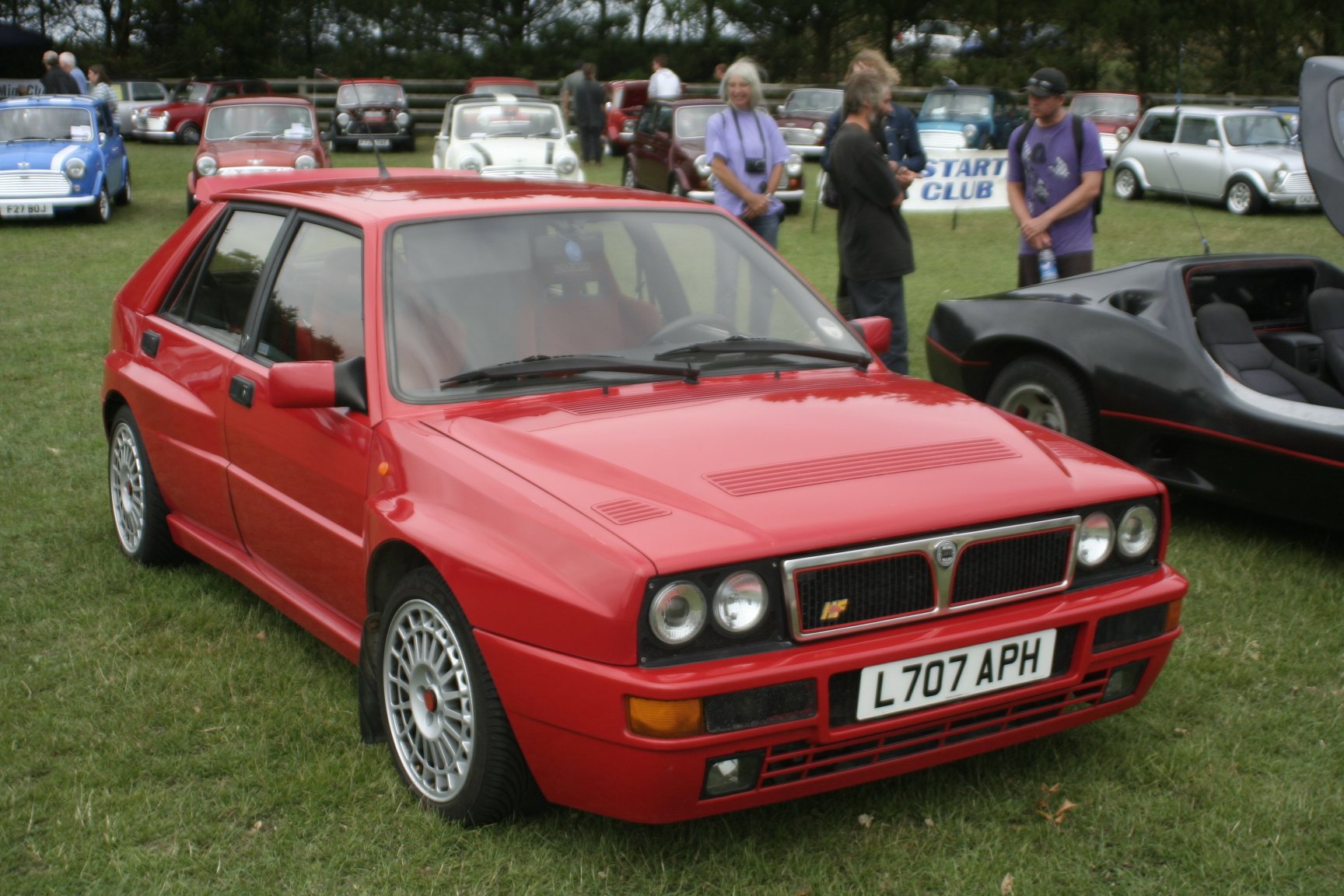

Lancia’s first-generation Delta began as a Giorgetto Giugiaro-designed family hatchback in 1979. The turbocharged, permanent-four-wheel-drive HF 4WD then provided the production basis for Lancia’s 1987 Group A campaign. Stellantis Heritage records a two-litre road engine with 165 HP and a driveline using a front differential, viscous centre coupling and Torsen-type rear differential. It was followed by the widened Delta HF Integrale in 1988.
The rally record explains the car’s reputation but not the condition of an individual road car. Lancia won six consecutive World Rally Championship manufacturers’ titles from 1987 through 1992, while road specifications kept evolving. Today, accurate identity, sound structure and evidence of restrained maintenance matter more than a car’s resemblance to a works rally machine.
8V, 16V, Evo I and Evo II
| Stage | Period | Key factory specification |
|---|---|---|
| Delta HF 4WD | 1986–1987 | Integrale predecessor; 1,995 cc turbo four, 165 HP, permanent four-wheel drive |
| Delta HF Integrale 8V | 1987/88–1989 | Wider arches and developed cooling, brakes and turbo installation; 185 bhp commonly quoted |
| Integrale 16V | 1989–1991 | 16-valve head, raised bonnet centre, 200 bhp and a nominal 47:53 front/rear torque split |
| Evoluzione I | 1991–1993 | Wider track and arches, revised suspension mounting and ventilation; 210 bhp |
| Evoluzione II | 1993–1994 | Revised engine management and catalytic equipment; 215 bhp in commonly documented European form |
These numbers are not enough to decode every car. Swiss-market and other emissions-controlled versions can depart from the familiar table, and special editions often combine distinctive colours, trim and plaques. All factory cars were left-hand drive; right-hand-drive cars are conversions whose parts, workmanship and steering geometry need separate assessment.
Identity and originality come first
Later bodywork, wheels, badges and cabin trim can be fitted to an earlier shell. Confirm the chassis number and compare it with registration, import and service documents before interpreting the visible specification. Lancia’s Stellantis Heritage programme offers a Certificate of Origin based on production records and, for eligible vehicles, a more involved Certification of Authenticity. Neither replaces an inspection, but factory documentation can clarify production date, original specification and provenance.
Inspect special-edition claims especially carefully. Ask for period documentation and check the whole combination of paint, upholstery, equipment, market and identifiers. A plaque by itself is not proof. Competition-style modifications may be appealing, but they should be disclosed, legal and supported by invoices showing who engineered them.
Body and corrosion inspection
An Integrale needs examination above and below on a lift. Independent buyer guides identify the wings, sills, floors, inner and outer wheelarches, suspension mountings, door bottoms, screen surrounds, pillars and valances as important corrosion areas. The radiator support is exposed through the bonnet vents. The rear edge of the roof and the metal around the tailgate hinges also deserve close attention.
Look for cracking around screen-to-scuttle corners, front chassis legs and the lower corners of door apertures, particularly where a car has been lowered or stiffened. Uneven door gaps, distorted apertures, fresh underseal over uncertain repairs and mismatched seams require a body specialist’s opinion. A glossy exterior cannot establish the integrity of the shell beneath it.
Accident and rally-style use can complicate the picture. Compare paint depth and panel fit, inspect suspension pick-up points and ask for photographs and invoices from any restoration. A properly documented structural repair is different from hidden patchwork; the inspection should establish which one is present.
Engine, turbo and service history
The Lampredi-derived two-litre turbo engine is durable only in the context of correct maintenance and sensible tuning. Insist on a cold start, then look for persistent smoke, abnormal knocks, unstable oil pressure and leaks. A specialist should assess turbocharger condition, cooling operation and evidence of non-standard boost or engine management. Modifications that permanently increase boost can shorten component life and make the original service schedule an inadequate guide.
Timing-belt evidence must correspond to the exact 8V or 16V engine and the specialist’s current time-and-distance recommendation. Published historic intervals differ between versions, and age matters even when mileage is low. An invoice stating the date, mileage, parts and workshop is stronger evidence than a handwritten note. If the record is uncertain, budget and plan with the inspecting specialist; this guide does not prescribe a replacement procedure.
Transmission, four-wheel drive and suspension
Drive the car from cold and again fully warm. The gearbox should select every ratio cleanly, without jumping out, obstructive synchromesh or unexplained whine. Listen for clonks and vibration during take-up, acceleration and overrun, and inspect the gearbox, transfer and differentials for leakage. Four closely matched tyres of the correct specification help protect both handling and driveline; mixed sizes or large wear differences need investigation.
Suspension bushes, ball joints, links, dampers and wheel bearings all age. Pulling under power, imprecise steering or a succession of knocks should not be accepted as an inevitable feature of an old performance hatchback. Check whether springs, dampers, wheels and steering components are standard, then have alignment and clearances assessed as a system. On a right-hand-drive conversion, identify the rack and conversion method rather than assuming the original steering response survived.
Cabin, electrics and final evidence
Test every gauge, lamp, switch, fan speed, window and locking function. Compare seats, steering wheel, instruments and trim with reliable documentation for the claimed year and edition. Worn cabin materials can be restored, but rare year-specific pieces may be difficult to replace correctly. Dampness near screens, roof edges or the rear hatch should lead back to a body inspection, not just a plan to dry the carpet.
A strong file links identity, maintenance and mileage over time. Look for original handbooks, import records, specialist invoices, older inspection certificates and photographs of restoration work. Run the appropriate history and theft checks in every country where the car has been registered. If records conflict, pause until the discrepancy is resolved.
Choosing the right Integrale
The 8V provides the earliest named Integrale experience; the 16V adds the later head and rear-biased nominal torque distribution; Evoluzione cars deliver the widest factory development and attract the greatest scrutiny over authenticity. Condition can reverse that hierarchy. A structurally sound, correctly identified 8V may be a better car than a superficially convincing Evo assembled from uncertain parts.
Start with our classic Italian car inspection checklist, then commission an independent Integrale specialist who can inspect the shell, driveline and documents together. Do not let a brief test drive or rally provenance story replace that work.
Sources and further reading
- Stellantis Heritage, “The four Lancia Delta HF all-wheel drive evolutions” — factory history and competition context.
- Hagerty UK, Lancia Delta Integrale buying guide — independent version and inspection guidance.
- Classic & Sports Car, Delta Integrale buyer’s guide — independent inspection context.
- Stellantis Heritage, Lancia Certificate of Origin.
- Stellantis Heritage, Lancia Certification of Authenticity.
Sources accessed 19 August 2026. Production cut-offs, outputs and emissions specifications vary by country, so the chassis and original market remain decisive.