Buyer’s guide
Alfa Romeo Giulia Type 952 Buyer’s Guide (2016–Present)
This guide covers the modern Alfa Romeo Giulia Type 952 from 2016 to the present: four-cylinder petrol and diesel cars, rear- and Q4 all-wheel drive, the 2.9-litre Quadrifoglio, the principal 2020 and 2023 model updates, and the production extension announced in 2026. It does not cover the classic 1960s Giulia.
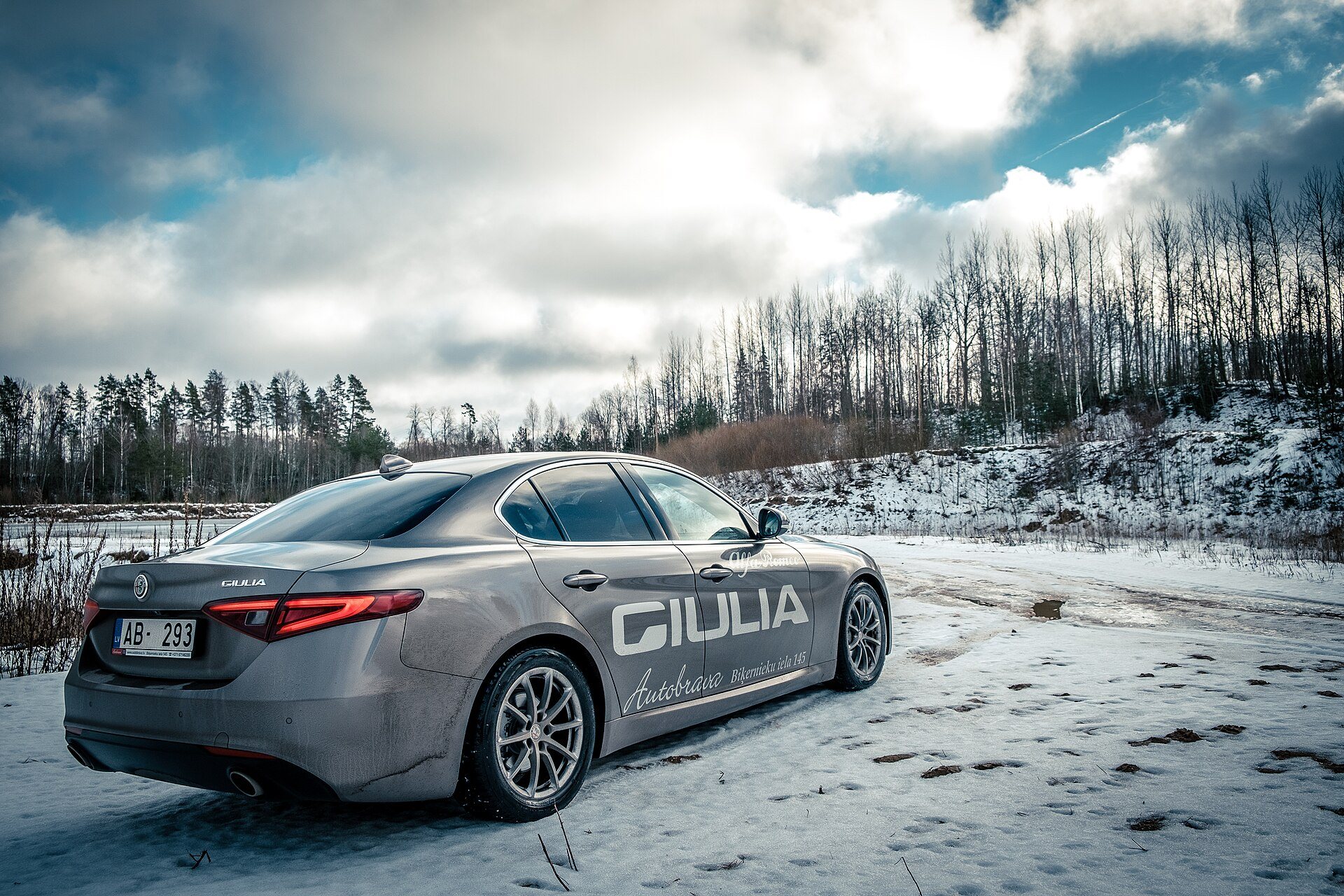

Alfa Romeo revealed the new Giulia in Arese on 24 June 2015, its 105th anniversary, and customer cars followed in 2016. The Giorgio architecture returned the marque’s core saloon to longitudinal engines and rear-wheel drive, with Q4 all-wheel drive offered in selected markets. A carbon-fibre propshaft, aluminium-intensive suspension and near-central placement of major masses were central to the engineering story.
The first presentation focused on the 510 HP Quadrifoglio, but most used Giulias are four-cylinder petrol or diesel cars. Engine output, trim names, drive layout and safety equipment vary substantially by country and model year. Decode the chassis and original market rather than assuming that a Veloce, Sprint or Ti badge means the same specification everywhere.
Type 952 range and major updates
| Stage | Date | Factory context |
|---|---|---|
| Launch range | 2016–2017 market era | 2.0 petrol at 200 or 280 HP; 2.2 diesel initially documented at 150 or 180 HP in the UK |
| Quadrifoglio | From launch | 2.9-litre twin-turbo V6, 510 HP in initial European specification; rear-wheel drive |
| MY2020 | Early 2020 | 8.8-inch touchscreen, revised console and materials, connected services and available Level 2 driver assistance |
| GTA and GTAm | 2020 | 540 HP 2.9 V6 derivatives; 500 numbered examples in total across both versions |
| 2023 update | From early 2023 | “3+3” adaptive matrix LED lamps, revised grille and 12.3-inch digital instrument display |
| Updated Quadrifoglio | 2023 market era | 520 HP in documented UK specification and a mechanical limited-slip differential |
| Current production | Announced February 2026 | UK orders reopened for 280 HP petrol and Quadrifoglio versions, with Giulia production extended to 2027 |
UK launch cars used an eight-speed automatic across the range, while transmission and drive choices elsewhere have differed. Later diesel outputs and trim structures also changed. The table identifies turning points, not a universal catalogue. Use the build sheet, owner’s manual and market brochure for the chassis being considered.
Battery health and electronic diagnosis
A healthy, correctly specified battery is important on a Giulia. Independent specialists report that an ageing or undercharged battery can disable stop-start and other convenience functions or contribute to multiple warnings. Test battery capacity, charging performance and the battery-monitoring system, but do not use low voltage as a blanket explanation for persistent faults.
Scan every control module with suitable Alfa Romeo diagnostics before purchase. Retain the report and compare active, stored and recently cleared faults with warning lamps and service invoices. Test the electronic parking brake, climate control, infotainment, USB and phone connection, windows, seats, lighting, cameras, sensors and every fitted driver-assistance function. A generic engine-code reader cannot assess the whole car.
Four-cylinder petrol inspection
See the 2.0-litre MultiAir turbo from cold. Look for a stable idle, clean response, correct oil pressure behaviour, no persistent misfire and no unexplained rattle. A respected Alfa specialist reports occasional MultiAir faults that can first appear as a cold misfire, plus cases involving the oil-pump drive attachment. These are inspection prompts, not a claim that all engines are affected; diagnosis requires fault data, oil-pressure checks and specialist knowledge.
Check the oil grade and service interval recorded on invoices against the chassis-specific manufacturer schedule. Inspect the turbocharger plumbing, cooling system and engine for leaks or non-standard software. A tuned car should have transparent calibration, supporting maintenance and evidence that insurance and emissions requirements are met.
Diesel inspection
The 2.2-litre diesel was offered in several outputs. Service history should document the correct oil, filters and timing-drive work for that version and market. On start-up and road test, investigate low oil-pressure messages, abnormal mechanical noise, smoke or uneven running rather than accepting them as diesel traits. Independent specialists have reported oil-pickup sealing concerns on some cars, which a pre-purchase inspection can evaluate without speculative dismantling.
Usage pattern matters to emissions equipment. A car used almost exclusively for short journeys may present different diesel particulate filter and exhaust-treatment risks from one driven regularly at operating temperature. Scan system status and fault history, verify that original emissions hardware remains present and legal, and check for evidence of repeated forced regeneration or undeclared deletion.
Quadrifoglio, GTA and hard use
The 2.9-litre V6 cars need a specialist familiar with their cooling circuits, turbochargers, active front splitter, adaptive chassis systems and model-specific service schedule. Alfa specialists flag turbo-actuator operation and the time-and-distance requirements for the auxiliary drive as inspection priorities. Confirm completion from detailed invoices for the exact market car; do not assume an interval quoted online applies universally.
Record the brake specification, including whether carbon-ceramic discs are fitted, and have wear and damage assessed professionally. Check tyres, wheels, underbody, splitter and cooling surfaces for track or impact evidence. Track use is not automatically disqualifying, but its heat cycles and loads should be reflected in brake, fluid, tyre and service records. GTA and GTAm identity requires factory documentation, not body parts alone.
Cooling, transmission, Q4 and chassis
Run the car through a full heat cycle and inspect every fitted coolant reservoir and circuit for loss or contamination. Check radiator and condenser faces for damage, particularly low in the front opening. The ZF eight-speed should engage consistently and shift cleanly cold and warm; service claims need invoices specifying the work and materials rather than “sealed for life” arguments.
On Q4 cars, confirm that all tyres match in approved size, construction and closely comparable wear. Large rolling-circumference differences can burden an all-wheel-drive system. Scan Q4 modules, listen for driveline noise and inspect for leakage. On every Giulia, assess front arms, rear links, dampers, wheel bearings and alignment. Inner-edge tyre wear, steering pull or an off-centre wheel calls for chassis measurement and inspection.
Body, water entry and crash repair
Compare bumper, bonnet and wing alignment, inspect the underbody and measure paint where appropriate. Front-end repair must also account for radar, camera, parking sensors, lighting and calibration. Confirm that driver-assistance systems show no faults and that evidence exists for calibration after relevant glass or collision work.
Check the boot, footwells, screen edges, door membranes and seals for water entry. Test both keys and inspect the cabin for damaged screens, lifting trim or intermittent controls. Wheel and sill damage may reveal poor jacking or kerb contact. A vehicle-history report complements this physical work but cannot replace it.
Recalls, history and the final decision
Recall coverage is country- and VIN-specific. For example, US NHTSA campaign 25V586 covers certain 2017–2019 Giulias for possible fuel-pump failure and loss of drive power. That does not define campaigns elsewhere or prove a particular car is included. Search the live national recall database and ask an Alfa Romeo representative to confirm completion for the chassis.
Build a chronology from registration, inspections and itemised servicing. Check ownership, finance, theft, mileage and damage records using services appropriate to the car’s countries of registration. Match modifications and replacement parts to invoices. A later model year may bring a better interface or different equipment, but a well-documented earlier car can still be the stronger purchase.
Start with our classic Italian car inspection checklist, adapting it for a modern electronically complex saloon, and commission an independent Giulia specialist. This guide cannot authenticate a GTA, certify recall completion or replace chassis-specific maintenance information.
Sources and further reading
- Alfa Romeo, 2015 Giulia unveiling.
- Alfa Romeo, Giulia UK range and technical material.
- Alfa Romeo, Giulia MY2020 update.
- Alfa Romeo, 2023 Giulia update.
- Alfa Romeo, Giulia orders reopened and production extended to 2027 — February 2026 UK range and production announcement.
- Alfa Romeo, Giulia GTA and GTAm introduction.
- The Alfa Workshop, Giulia buyer’s guide — independent specialist inspection context.
- NHTSA campaign 25V586 acknowledgement — US-market fuel-pump recall scope.
Sources accessed 19 August 2026. Range, recall and maintenance information is market-specific and can change; verify the VIN against current manufacturer and national records.