Ferrari ownership
F430 running costs: UK examples and a personal budget
Current UK workshop menus put useful numbers around routine service, but there is no honest universal annual figure. Labour, tax, insurance, use and the condition of a particular F430 vary too widely, so a sound budget separates predictable commitments from wear and deferred maintenance.
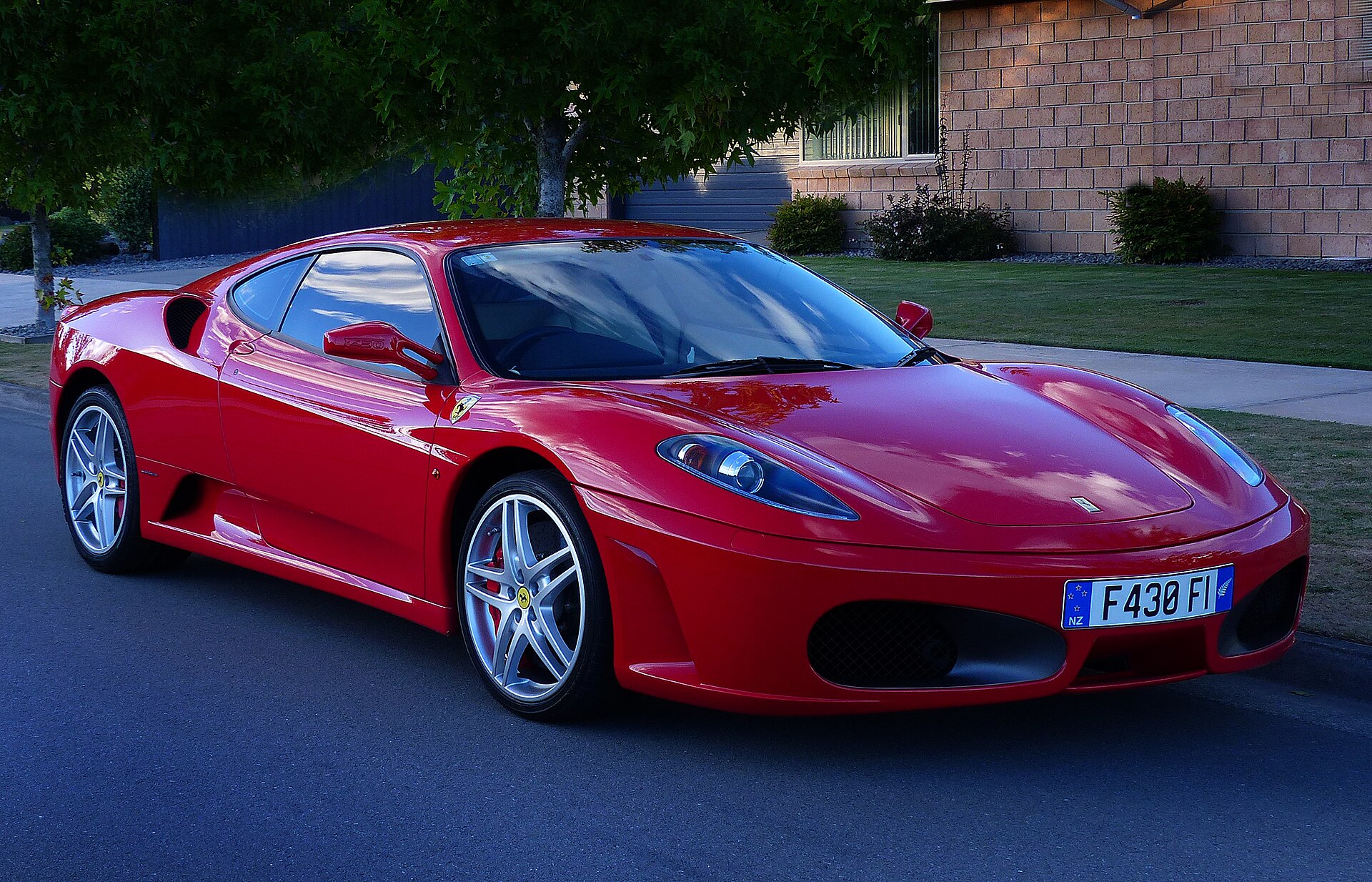
Ferrari offered the F430 as a berlinetta and Spider, with either a conventional six-speed manual or the electrohydraulic F1 automated manual. Carbon-ceramic brakes were optional before becoming standard in later production, and specification varies by market. Those differences affect inspection priorities and eventual bills, so any cost plan must begin with the chassis number, build specification and documented condition of the individual car.
Published workshop totals often omit their country, date, tax treatment, labour rate or the parts actually fitted. Currency conversion does not repair those omissions. Instead of copying a headline number, ask local specialists and insurers for itemised written quotations based on the exact car and intended annual use.
Build the budget in layers
The first layer repeats with time: scheduled maintenance, insurance, registration or road tax, secure storage where required, battery care and any mandatory inspection. The second follows use and age: fuel, tyres, brakes, fluids and ordinary wear. The third is car-specific: rectifying deferred maintenance, corrosion or accident damage, transmission faults, exhaust problems, interior deterioration and body-specific systems.
For UK vehicle tax, cars first registered between 1 March 2001 and 31 March 2017 are banded by the CO2 figure on the V5C. From 1 April 2026, a car whose V5C shows more than 255 g/km pays £790 as a single twelve-month payment (band M) if it was first registered on or after 23 March 2006; one first registered before that date falls in band K at £445, because band K also covers cars above 225 g/km registered before 23 March 2006. Confirm both details on the car's own V5C and recheck the rates each April.
A simple planning expression is: fuel plus annual service plus insurance and local charges, then annualised tyre and brake use, followed by separate wear and condition reserves. Enter only quotations and consumption assumptions that apply to your region, date and driving plan. Revisit them before purchase and at every annual review.
| Budget line | What changes it | Evidence to obtain |
|---|---|---|
| Time-based ownership | Country, registration, agreed use, storage and driver profile. | Current local tax rules, insurer quotation and storage terms. |
| Scheduled maintenance | Model year, previous work, annual use and workshop labour. | Correct handbook schedule and an itemised local quote. |
| Fuel and consumables | Route, traffic, driving style, tyre choice and distance. | Your mileage plan, local fuel price and approved specifications. |
| Brakes and tyres | Iron or carbon-ceramic brakes, age, measurements and use. | Physical inspection, tyre date codes and brake condition report. |
| Transmission | Manual or F1, clutch condition, hydraulics and driving history. | Invoices, diagnostic data where applicable, and hot and cold testing. |
| Condition reserve | Deferred work, modifications, accident history and body style. | Independent pre-purchase inspection with priorities in writing. |
UK specialist price examples, rechecked 24 September 2026
These advertised prices show the scale and the importance of comparing scope, not a guaranteed bill. They come from three independent UK workshops, showed the same figures on 19 August 2026 and again on the date above, and are not endorsements. SB Race Engineering lists an annual service at £840, but its page text does not state the tax treatment. Kent High Performance Cars lists prices before VAT, while JMH states that its advertised prices include parts, labour and 20% VAT.
| UK workshop | Published F430 item | Listed price and treatment |
|---|---|---|
| SB Race Engineering | Annual service | £840; tax treatment not stated in the service page text. |
| Kent High Performance Cars | Annual service; clutch replacement; hourly labour | £745; £4,450; £120 per hour — all excluding VAT. |
| JMH Automotive | Annual service; major service | £888; £1,648 — parts, labour and 20% VAT included; a separate £9.90 environmental fee is stated. |
Do not average unlike packages into a forecast. Ask what fluids, filters, diagnostics and inspections are included, whether age- or mileage-triggered items are extra, and how VAT and waste charges are handled. Then obtain a written quotation for the exact chassis. Insurance, fuel, tyres, brakes, storage, tax and deferred work still sit outside these service-menu examples.
Annual maintenance still matters at low mileage
The F430 owner's manual specifies maintenance intervals by both distance and time, with maintenance at least annually even when the distance threshold has not been reached. A low odometer reading therefore does not justify a multi-year gap. Fluids age, seals and hoses experience time, and a car stored for long periods can develop different needs from one used regularly.
The F430's cam timing is chain-driven, so it should not inherit an earlier Ferrari V8's routine timing-belt replacement story. That does not make the engine maintenance-free. The correct schedule, fluid specifications and market supplements must be taken from the car's handbook, while invoices should show dates, mileage, parts and fluids rather than the single phrase “annual service.”
For a winter lay-up, the 2006 US-market Spider handbook asks for a level, covered, ventilated space; a gear engaged instead of the parking brake; tyres at 3.0 bar (43.5 psi), with the car moved occasionally so they do not rest on one patch; and a breathable cover. The battery should be isolated at its master switch and recharged at least every three months, or monthly if left connected to power the alarm and radio memory. Before the next drive, restore normal tyre pressures, check every fluid level and confirm each step against your own car's handbook.
A UK keeper who will neither use nor keep the car on a public road can also make a SORN. It ends the legal need to tax the car and, in Great Britain, to insure it, and DVLA refunds any full months of remaining tax, but until the car is taxed again it may be driven on the road only to or from a pre-booked MOT or other test, and it must be insured for that journey. Storage does not remove the risk of fire, theft or damage, so ask the insurer about laid-up cover before cancelling a policy.
F1 clutch data is evidence, not a forecast
The F1 transmission operates a conventional clutch electrohydraulically. Compatible diagnostics can estimate clutch wear and help assess engagement, but a displayed percentage is not a warranty of remaining distance. Manoeuvring, hill use, setup and past driving influence wear. Review the reading beside clutch position, fault history, actual behaviour and invoices from a Ferrari-experienced workshop.
A factory manual car does not offer the same diagnostic wear estimate. Its clutch must be judged through operation, records and physical assessment. With either transmission, confirm the car's original specification: the presence of a gated lever alone cannot prove that a car left Maranello as a manual.
Brakes and tyres are specification-specific
Establish whether the car has iron or carbon-ceramic brake discs. A photograph or mileage assumption cannot price their future. A specialist should identify the components and assess measurable condition, damage and wear with the appropriate method. Ask the written report to distinguish immediate faults from normal future consumption.
Tyres require the correct size, load and speed capability and should be assessed as a matched set. Pirelli's current vehicle catalogue is one route to confirmed fitments, but availability changes by country. Tread depth alone does not establish condition: inspect damage and the four-digit manufacturing date code, then follow tyre-maker and local safety guidance rather than adopting a universal age cut-off from a sales advert.
Condition risks that deserve explicit inspection
A Ferrari specialist pre-purchase inspection should examine the exhaust manifolds and associated catalysts, engine and transmission mounts, suspension joints, cooling system, leaks, electrical functions and signs of collision repair. F1-equipped cars add hydraulic and clutch evidence. A Spider adds the roof mechanism, hydraulic lines, water management and body-specific trim. Sticky interior finishes may be cosmetic, but they still belong in the scope if the buyer wants an honest reserve.
These are inspection categories, not a prediction that every F430 will fail in the same way. Parts can also have been replaced or revised during the car's life. Record what is fitted, what condition was observed and which claim is supported by an invoice. Do not let a generic problem list overrule good chassis-specific evidence.
Recall checks are tied to market and VIN
United States records illustrate why a VIN check matters. NHTSA documents include a 2022 brake-fluid reservoir cap campaign covering specified 2005–2009 F430 vehicles; a 2006 clutch hydraulic union campaign for certain 2005–2006 manual cars; and a 2009 Spider hydraulic-line heat-shield campaign for certain 2005–2007 cars. Applicability and completion must be verified for the individual VIN.
Those US campaigns do not establish the status of a car registered elsewhere. Use the relevant national authority and an authorised Ferrari network contact for the market in question. Keep completion evidence with the history file.
Turn the inspection into a decision
Give the inspecting specialist the freedom to test the car cold and hot, scan the relevant control units, identify the brake and transmission specification, and inspect the underside. Ask for photographs, measurements where appropriate, and three clear groups: required now, likely during the planned ownership period, and monitor. Then obtain local, dated quotations for the first two groups.
The purchase price is only one input. A higher-priced car with complete evidence can present a clearer plan than a cheaper car with missing records, but no documentation removes all risk. The rational outcome may be to buy, renegotiate after evidence, or walk away. What matters is that the decision reflects this car and your location—not an unsupported internet average.
Sources
- Ferrari F430 official model archive — factory specification and model context. Accessed 2026-09-24.
- Ferrari F430 Spider owner's manual, 2006 US version — operating, scheduled-maintenance and long-term storage context. Accessed 2026-09-24.
- Ferrari Technical Information portal — route to official repair and technical literature. Accessed 2026-09-24.
- Aldous Voice 360 and F430 buying guide — independent Ferrari specialist inspection context. Accessed 2026-09-24.
- Pirelli Ferrari F430 tyre catalogue — current fitment lookup; availability is market-dependent. Accessed 2026-09-24.
- NHTSA recall 22V-536 manufacturer notice — US brake reservoir cap campaign scope. Accessed 2026-09-24.
- NHTSA recall 06V-478 acknowledgement — US manual-clutch hydraulic union campaign. Accessed 2026-09-24.
- NHTSA recall 09V-048 manufacturer notice — US F430 Spider hydraulic-line campaign. Accessed 2026-09-24.
- NHTSA VIN recall lookup — current US VIN-specific campaign check. Accessed 2026-09-24.
- SB Race Engineering, Ferrari 430 annual service — published UK annual-service price and stated scope. Accessed 2026-09-24.
- Kent High Performance Cars, Ferrari 430 pricing — published UK annual-service, clutch and labour prices excluding VAT. Accessed 2026-09-24.
- JMH Automotive, Ferrari fixed-price servicing menu — published UK annual and major-service prices including parts, labour and VAT. Accessed 2026-09-24.
- GOV.UK V149, rates of vehicle tax from 1 April 2026 — UK bands K and M for cars first registered from 1 March 2001 to 31 March 2017, including the pre-23 March 2006 rule. Accessed 2026-09-24.
- GOV.UK, vehicle tax rates for cars registered 1 March 2001 to 31 March 2017 — bands, rates and the V5C as the place to find the CO2 figure. Accessed 2026-09-24.
- GOV.UK, when you need to make a SORN — UK off-road notification, tax refund and permitted road use. Accessed 2026-09-24.
- GOV.UK, vehicle insurance — UK rule that a vehicle driven on UK roads must be insured. Accessed 2026-09-24.
Published prices are a dated UK snapshot, not a quotation or total ownership forecast. Region, tax, labour, included parts and vehicle condition change the result; confirm every figure before relying on it.